
Analogue Technology
Introduction
Analogue technology refers to systems that process information in a continuous, non-digital format. It has historically powered much of the communication, entertainment, and measurement tools used across industries before the rise of digital alternatives. From radio signals and cassette tapes to analog CCTV and telephony systems, analogue technology laid the foundation for many of today’s digital innovations.
Despite the shift toward digital, analogue systems are still widely used in specific applications due to their simplicity, reliability, and cost-effectiveness.
What is Analogue Technology?
Analogue technology uses continuous signals to represent information. These signals can vary in amplitude, frequency, or phase and are typically transmitted via electrical voltages or mechanical movement. Unlike digital systems that rely on binary (1s and 0s), analogue systems interpret and process signals in real-time with natural variations.
Examples include:
Analog clocks
Vinyl records
Landline telephones
Analog video and audio equipment
Traditional CCTV systems
Key Characteristics of Analogue Systems
Continuous Signal
Data is represented as a continuous flow, rather than discrete digital steps.
Real-Time Operation
Analogue devices process signals in real time without needing conversion or encoding.
Simplicity
Most analogue devices are mechanically or electrically simpler than their digital counterparts.
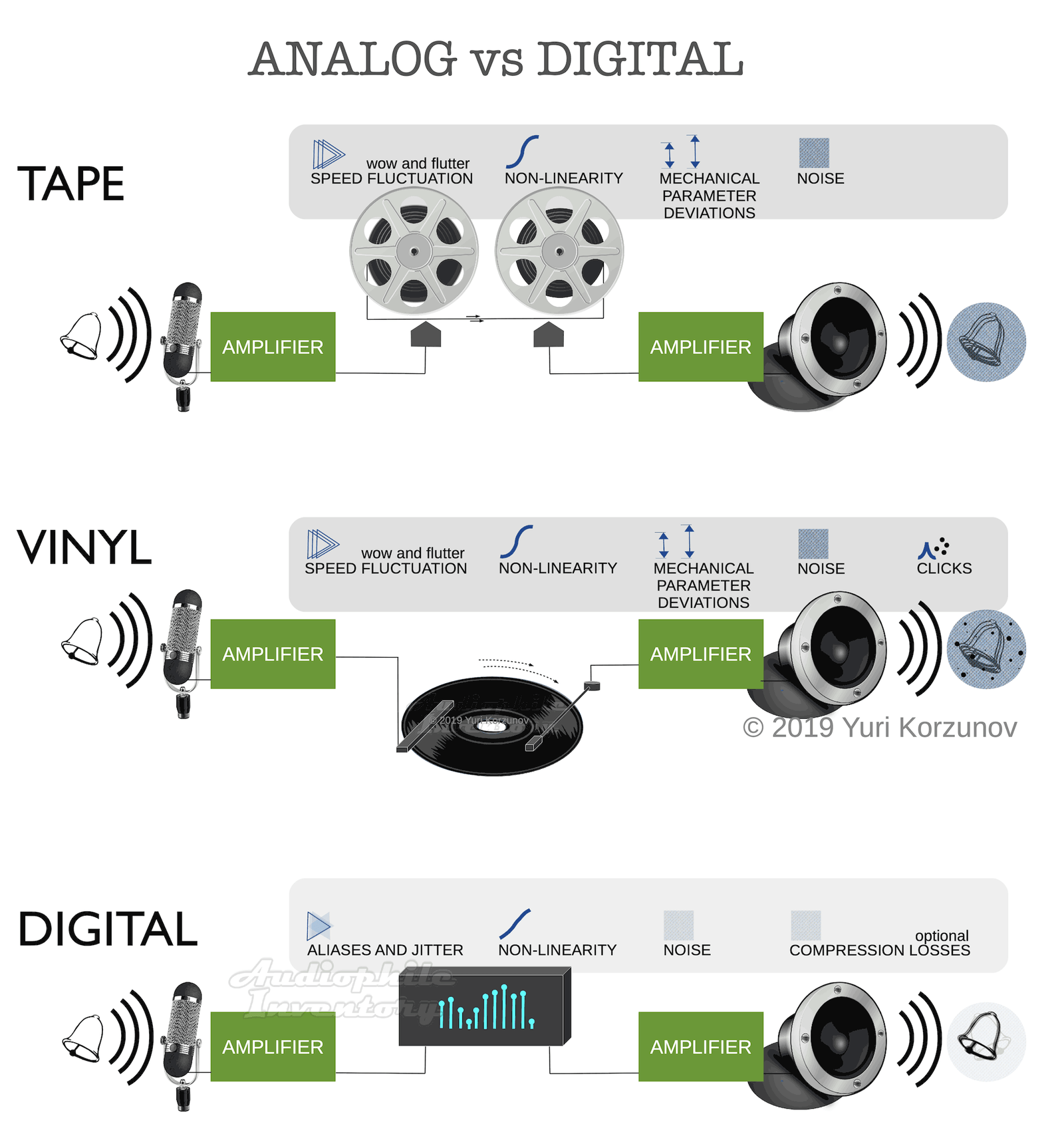
Signal Degradation
Analogue signals are susceptible to noise and interference, which can degrade quality over long distances or time.
Examples of Analogue Technology
1. Analog Telephony
Traditional telephone systems transmit voice as analog signals over copper lines. Though largely replaced by VoIP and digital exchanges, analog phones are still used in legacy PBX setups.
2. Analog CCTV Systems
Use coaxial cables to transmit standard-definition video from cameras to DVRs. These systems are still used in budget-conscious security projects or retrofitted infrastructure.
3. FM/AM Radio
Broadcasts audio signals over radio waves using frequency or amplitude modulation—still widely used globally, especially in remote or rural areas.
4. Cassette Tapes and Vinyl Records
Store audio signals in analog form. These formats are known for their distinctive “warm” sound and have seen a niche resurgence.
5. Analog Sensors
Many physical sensors such as thermocouples, potentiometers, and pressure gauges produce analog outputs, especially in industrial and automation settings.
Applications Where Analogue Still Matters
Audio equipment: High-end audio enthusiasts prefer analog equipment for its sound characteristics.
Broadcasting: Some local stations still rely on analog radio for cost efficiency.
Surveillance: Budget installations still use analog CCTV with DVRs.
Education and Laboratories: Used for teaching fundamental electronics and signal processing concepts.
Industrial automation: Many legacy machines and sensors still operate on analog signals.
Transition from Analogue to Digital
While digital systems offer improved efficiency, clarity, and integration capabilities, many industries maintain analogue devices due to:
Existing infrastructure investment
Lower replacement costs
Simplicity and robustness
Minimal maintenance in some environments
Hybrid systems—where analogue devices are connected to digital converters (e.g., A/D converters in DVRs)—help extend the life and utility of analogue technologies in modern systems.
Let me know if you’d like an image illustrating analogue vs digital systems, or one showing real-world analogue equipment setups. I can fetch or create one from Google based on your page layout.